Quick answer
Choose activities that fit one container
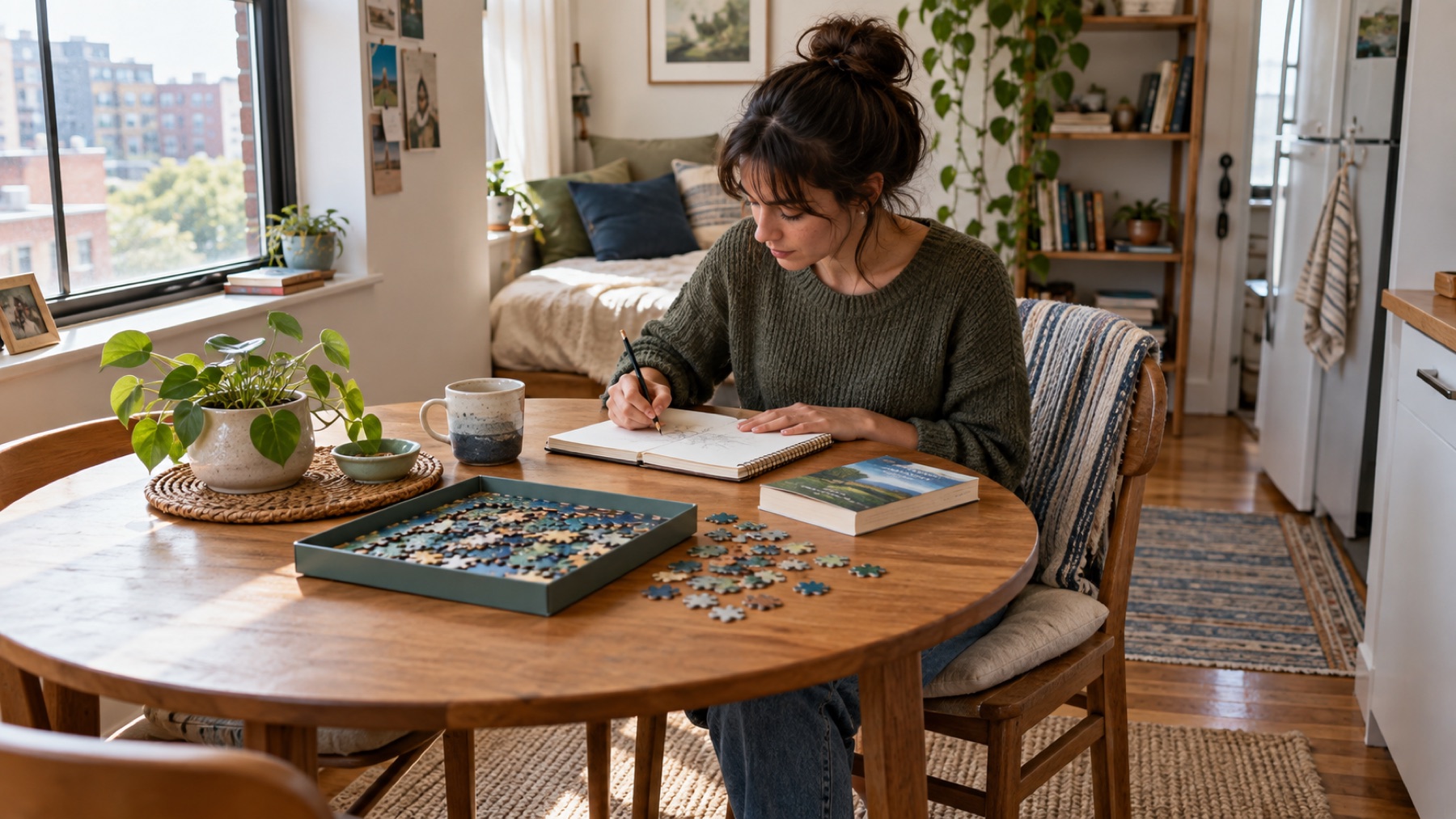
For a small apartment, start with reading, sketching, letter writing, a compact puzzle, cards, visible mending, simple pantry cooking, or a neighborhood walk. The useful test is not whether an idea sounds creative. Ask whether it fits one book, page, tray, bag, or pair of shoes and can be cleared away without reorganizing the room.
Compare space, noise, mess, and storage
| Activity | Surface | Noise | Cleanup | Storage rule |
|---|---|---|---|---|
| Reading | Chair or bed | Very low | None | One current book |
| Sketching | One notebook | Very low | Low | Folder and pencil case |
| Letter or journal page | Lap or table corner | Very low | Low | Notebook and pen |
| Compact puzzle | Shallow tray | Low | Medium | Tray slides onto a shelf |
| Cards | Small table | Low | Low | One deck |
| Visible mending | Lap or table | Very low | Low | One repair pouch |
| Pantry cooking | Kitchen counter | Low to medium | Medium | Use existing ingredients |
| Neighborhood walk | None indoors | None indoors | None | One pair of shoes |
Use the one-motion cleanup test
Before starting, decide how the activity leaves the shared surface. A puzzle can live on a tray, drawing supplies in a folder, mending in a pouch, and a current book on one shelf. If cleanup requires sorting many loose parts, find a smaller first version.
- 1. Name the surface. Choose one table corner, tray, lap, chair, or kitchen counter.
- 2. Name the container. Every loose item should return to one bag, folder, box, or tray.
- 3. Name the stopping point. One page, one repair, one puzzle color, one recipe, or one short route is enough.
- 4. Clear it in one motion. Lift the container away rather than sorting the project again.
Optional one-book format
If a blank page keeps sending you back to a screen
Try two handwritten prompts on scrap paper first. If the prompts help and you want one object that contains both the ideas and writing space, this physical journal fits on a shelf without adding a larger supply system.
Affiliate disclosure: The Amazon button below is a paid link. As an Amazon Associate, Meridian Health Guide earns from qualifying purchases.

642 Things to Write About
San Francisco Writers' Grotto and Po Bronson · Chronicle Books
A 304-page journal built around 642 short writing prompts, with space to respond directly in the book.
Format note: Choose this when a blank page stops you. Plain paper is the better starting point when you already know what you want to write.
Title, contributors, format, page count, ISBN 9781452105444, cover, and prompt structure were checked against Chronicle Books; Amazon ASIN 1452105448 was checked against the matching Amazon detail page on October 1, 2026. We have not personally tested this journal.
Keep the plan compatible with neighbors and housemates
For quiet hours, favor reading, writing, sketching, cards, puzzles, or hand sewing. Put felt or a folded cloth under trays that scrape. Avoid repeated impact on the floor, loud tools, or speakers used to cover building noise. A screen-free activity should not become someone else's noise problem.
No clear table?
Use a clipboard, lap desk, shallow tray, or the pages of one notebook. Avoid projects that need to remain spread out overnight.
No storage?
Borrow first, use consumable household materials, or choose walking, reading, writing, and conversation before buying a kit.
Direct answers
Small-apartment activity questions
What are good screen-free activities for a small apartment?
Choose activities that fit in one page, book, tray, bag, or pair of shoes. Reading, sketching, writing letters, compact puzzles, cards, visible mending, simple pantry cooking, and a neighborhood walk all work without a dedicated room.
What can I do without making noise for neighbors?
Read, write, sketch, sort a puzzle, mend one item, play quiet cards, or prepare a no-cook snack. Avoid late-night hammering, jumping, loud speakers, and activities that transfer impact through the floor.
How do I keep a hobby from creating clutter?
Give the current project one fixed container and choose a stopping point that fits inside it. Borrow or improvise for two sessions before buying specialized tools or storage.
What if my table is also my desk and dining space?
Use a shallow tray, folder, or project bag that can be lifted away in one motion. Start activities that can return to that container without sorting the entire room first.
Try one activity before creating storage for it
Compare repeatable options in the screen-free hobby guide, or use the activity finder for a one-evening test. If the workday has just ended, follow the 15-minute after-work reset.
Editorial note: These suggestions are organized by practical constraints and do not claim health outcomes. We did not test or rank the optional prompt journal. The header is an AI-generated illustration.