The most useful beauty or wellness book is not necessarily the one with the most promises. It is the one that helps you ask better questions, distinguish a plausible mechanism from a proven outcome, and recognize when a book cannot answer an individual health concern.
This list is designed for readers comparing home skincare, light devices, heating pads, massagers, and manual tools. It includes books that may reduce unnecessary shopping as well as books that provide background before a purchase. A place on this list does not mean Meridian Health Guide agrees with every claim in a title. Readers can also browse the complete evidence-aware reading list or compare current face, scalp, and light guides.
Quick answer: which book fits which question?
| Your main question | Start with | Best format | Important limitation |
|---|---|---|---|
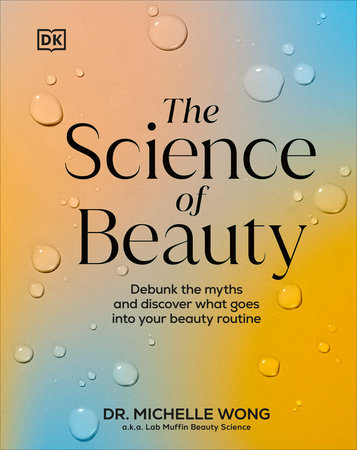
| How do beauty ingredients and marketing claims work? | The Science of Beauty | Hardcover | Product science is not personal dermatology advice |
| Do I need such a complicated cleansing routine? | Clean | Kindle | Reported science is not a diagnosis for reactive skin |
| How can I simplify everyday skincare decisions? | The Skincare Bible | Kindle | General routines may not fit a specific condition |
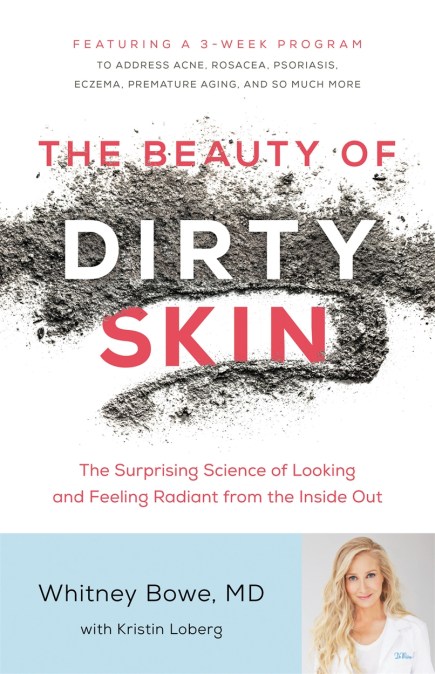
| What is the broader skin and microbiome argument? | The Beauty of Dirty Skin | Hardcover | Lifestyle hypotheses do not validate a device |
| What can I try before buying another recovery tool? | Built to Move | Hardcover | Self-assessments do not identify an injury |
| How do common yoga positions load the body? | Science of Yoga | Paperback | An illustrated pose is not automatically safe for everyone |
| How is self-massage commonly mapped and described? | The Trigger Point Therapy Workbook | Paperback | A tender area does not prove a trigger point is the cause |
| Where can I begin reading about sleep and recovery? | Why We Sleep | Kindle | Some interpretations in the book have been publicly debated |
How we selected these books
We used four filters.
- Topic fit: The book must help a reader understand a category already covered by Meridian Health Guide, such as skincare claims, movement, massage, or recovery.
- Author and publisher traceability: The author, title, publisher, and edition must be identifiable. Anonymous compilations and imitation workbooks are excluded.
- Decision value: The book should help readers compare options, understand mechanisms, or decide that a device is not the first step.
- Stated limits: We favor books that can be described without turning broad education into a treatment promise.
Commercial popularity alone is not an evidence standard. Reader ratings can indicate usability, but they cannot establish clinical accuracy. Likewise, an author credential can be relevant context without making every sentence in a book correct.
1. The Science of Beauty by Michelle Wong
This is the broadest match for readers trying to understand cosmetic ingredients, formulation, safety debates, and viral beauty claims. DK describes it as a guide to what goes into a beauty routine and how to separate myths from useful information.
Choose the hardcover if you expect to use it as a visual reference. Choose Kindle if you mainly want searchable explanations. It is especially relevant before buying an LED mask or adding several active skincare products at once, because it encourages the reader to inspect the claim rather than react to the marketing category.
2. Clean by James Hamblin
Clean is a reported exploration of cleansing, personal-care habits, and skin-microbiome science. Its value is not a universal instruction to stop washing or stop using products. Its value is the larger question it raises: which parts of a routine are necessary, and which parts were created or amplified by commercial expectations?
This is a good Kindle choice because it is narrative rather than a diagram-first manual. Readers with persistent itching, rash, acne, or suspected allergy still need appropriate medical assessment; a book about the history and science of cleanliness cannot determine the cause. Our red light mask and gua sha comparison uses the same distinction between background knowledge and proof for an exact product.
3. The Skincare Bible by Anjali Mahto
This title is suited to readers who want a dermatologist-written overview of common routine questions without starting from a device. It is more practical than a formulation textbook and can help organize questions about cleansers, moisturizers, sun protection, and active ingredients.
The key boundary is individual variation. A general guide can explain product categories, but it cannot examine skin, review medications, or identify why a particular routine is causing irritation. Kindle is the most straightforward format for quick topic lookup, although Amazon availability may vary by region.
4. The Beauty of Dirty Skin by Whitney Bowe
This book presents a broader view of skin, lifestyle, and microbiome research (official title and edition context). It is included because many beauty-device buyers encounter claims linking skin appearance to sleep, diet, stress, and the gut. Those ideas deserve careful reading, not automatic acceptance or dismissal.
The hardcover is listed under the US title. The Kindle edition may appear as Dirty Looks, an alternate title, so verify the author and publisher before purchasing. Do not treat a broad skin-lifestyle argument as evidence that a specific light mask, brush, or supplement will produce a promised result.
5. Built to Move by Kelly and Juliet Starrett
Before buying another heating pad or massager for ordinary stiffness, some readers may benefit from a structured look at daily movement habits. The publisher presents Built to Move around practical habits and self-assessments rather than a single recovery gadget.
The hardcover is easier to use when moving between assessments. Kindle is reasonable for linear reading. New weakness, numbness, severe pain, pain after injury, or progressive symptoms should not be managed by passing a self-test in a book.
6. Science of Yoga by Ann Swanson
This is an illustration-heavy anatomy and physiology reference. DK’s edition page emphasizes visual explanations of common poses and body systems. For that reason, print is the stronger format for most buyers; the author also recommends print or a larger-screen digital format for the artwork.
Use it to understand movement mechanics and terminology, not to infer that every pictured position is suitable for every body. Balance limitations, joint replacements, recent injury, osteoporosis risk, and other health factors can change what is appropriate.
7. The Trigger Point Therapy Workbook by Clair Davies and Amber Davies
This is the most directly relevant title for readers researching massage tools. The workbook uses diagrams and body-region organization to explain a self-massage framework. Paperback is easier for cross-referencing; Kindle is more searchable but less comfortable for frequent movement between illustrations.
Its main limitation is diagnostic certainty. Tenderness can have many causes. A reader should not conclude that a trigger point explains persistent pain merely because a diagram appears to match. Stop self-massage if symptoms intensify, spread, produce numbness or weakness, or follow a significant injury.
8. Why We Sleep by Matthew Walker
This popular-science book is included as an accessible entry point to sleep and recovery, not as the final word on sleep science. Kindle suits its narrative structure. The evidence-aware way to read it is to separate the broad lesson that sleep matters from the precision of every statistic or causal claim.
Some interpretations in the book have received detailed public criticism. That does not make the entire subject useless; it means readers should consult current clinical guidance for insomnia, sleep apnea, medication questions, or persistent daytime sleepiness rather than relying on a single popular title.
Kindle versus print: a practical buying rule
Choose print when the book depends on anatomical drawings, worksheets, comparison spreads, or frequent page switching. Choose Kindle when the book is mostly narrative, when search is valuable, or when immediate delivery matters more than visual layout.
Before buying, confirm the exact title, author, format, language, and publisher on Amazon. Used copies, alternate editions, and regional Kindle listings can differ. We intentionally do not publish a fixed price because Amazon controls pricing and availability.
Frequently asked questions
Can a wellness book count as medical advice?
No. A book can provide education and questions to discuss, but it cannot examine you, diagnose symptoms, or account for every medication and condition.
Are dermatologist-authored skincare books automatically correct?
Credentials are useful context, not a guarantee that every interpretation is current, complete, or universally applicable.
Is Kindle always cheaper than print?
Not necessarily. Prices and promotions change. Compare the current total and choose based on how the book is designed to be used.
Why recommend a book instead of another device?
Sometimes the reader needs a decision framework, routine simplification, or movement context more than another product. A book can be the lower-complexity first purchase.
Does Meridian Health Guide review every page of each book?
No. This is a curated buyer’s reading list based on topic fit, traceable editions, author context, format usefulness, and stated limits. It is not a line-by-line academic review.
Disclaimer
This article is educational and does not provide medical advice, diagnosis, or treatment. Persistent, severe, changing, or unexplained symptoms require appropriate professional assessment. A listed book cannot determine whether a device, exercise, skincare routine, or self-massage technique is suitable for an individual reader.
Affiliate disclosure: As an Amazon Associate, Meridian Health Guide earns from qualifying purchases. We may receive a commission at no additional cost to you when you purchase through eligible links. Book selection and editorial cautions are not based on commission rate.